Building the Umamii B2B Portal: Concept to Delivery
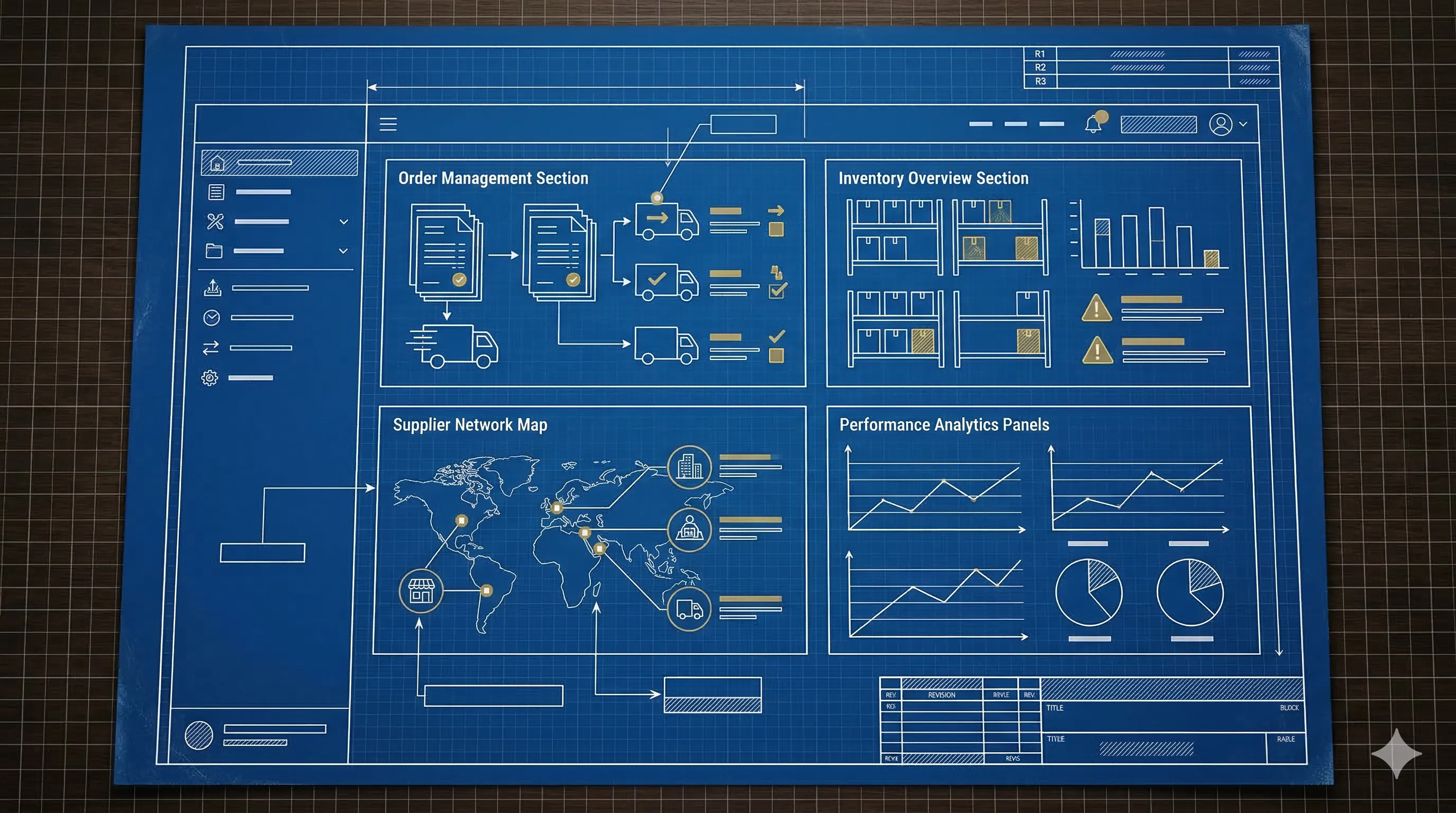
The B2B Portal was a critical initiative for Umamii. We needed to support a thriving two-sided marketplace and accelerate restaurant adoption. We mapped out two clear sets of goals to make this happen. We have a foundational V1 and a growth-focused V2.
Our core mission for V1 was simple: give restaurant owners a quick, safe way to claim their profile, keep it accurate, and see exactly how many diners Umamii is sending their way.
The Development Experience
Bringing this portal to market required some sharp architectural decisions and strict feature prioritization. We knew we had to address essential user experience and stability concerns right out of the gate.
Key Technical Decisions
We opted to use React (Next.js) and Vite for the web portal instead of Expo Web. This gave us much better handling for the complex data tables and charting libraries we needed for the dashboard.
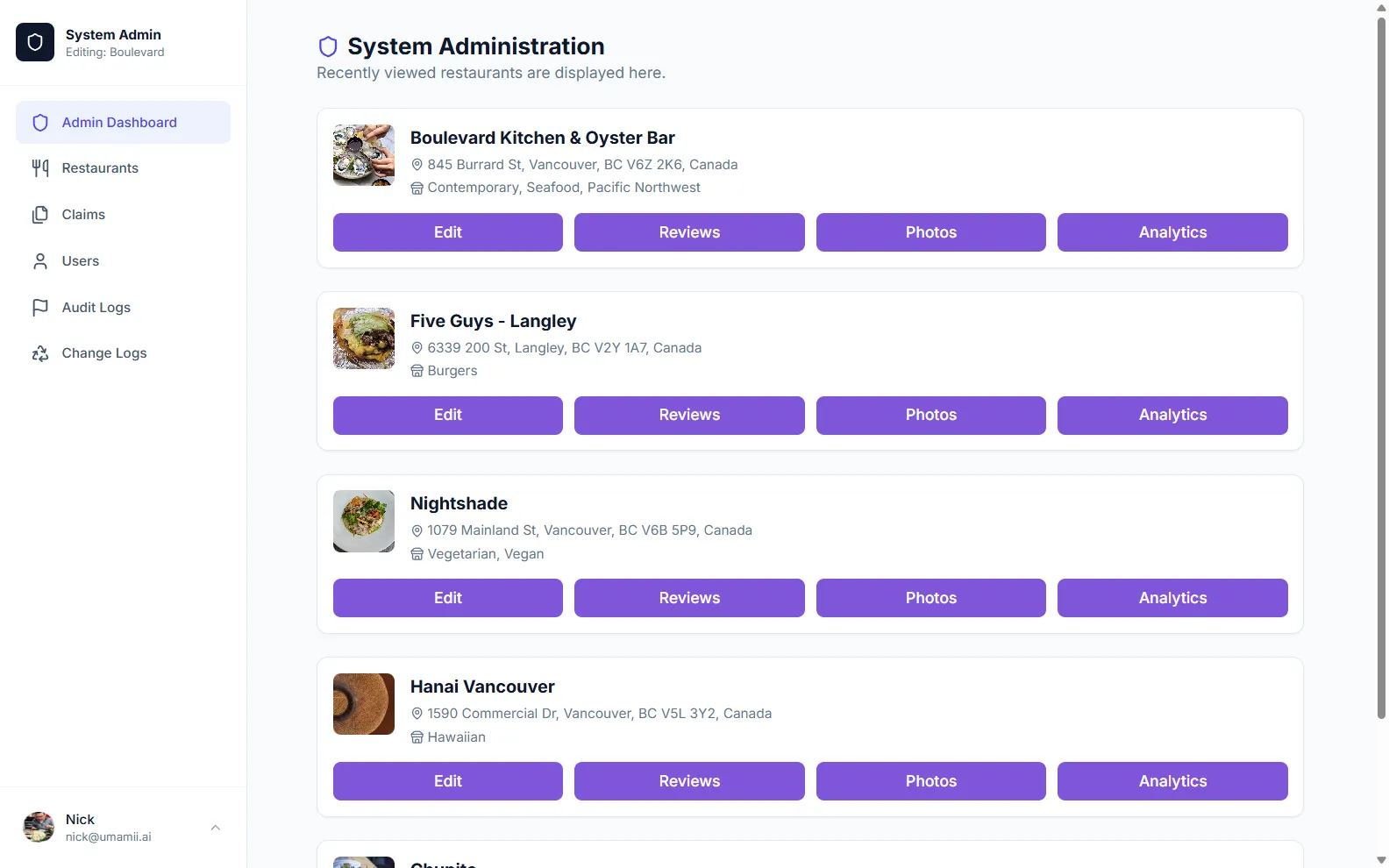
For authentication, we implemented a unified Single Sign-On using the same Firebase Auth system as our mobile app. This seamless integration allows an existing Umamii user to log in and access their business dashboard without the friction of creating a brand new account.
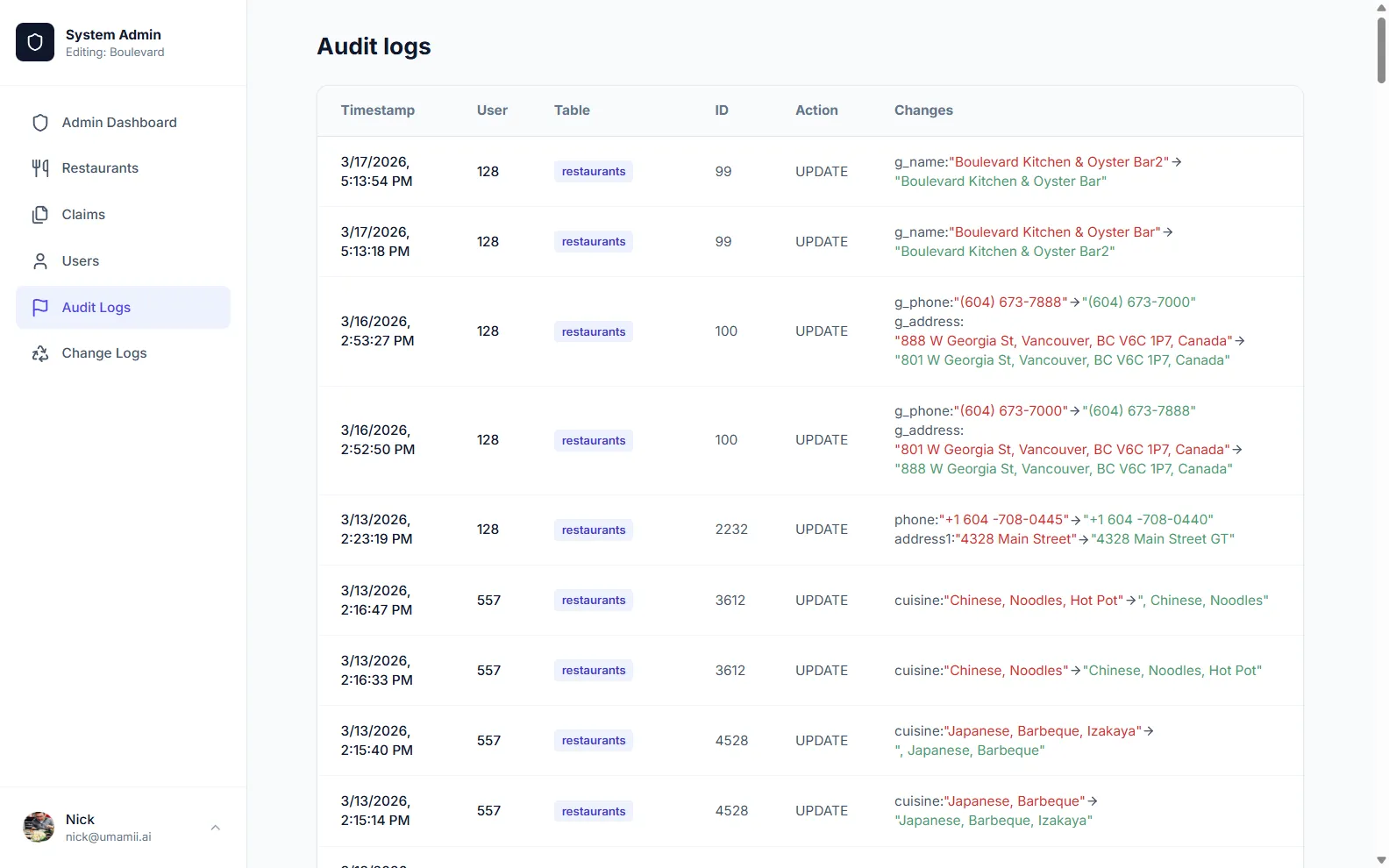
Perhaps our most critical data integrity win was the Data Preservation Layer. We implemented an Audit Change Table to prevent manual, owner-verified profile edits from being overwritten by our automated data ingestion scripts. This solved a major risk and gave our users peace of mind.
Core V1 Features
For our initial launch, we focused on the essentials for self-service onboarding:
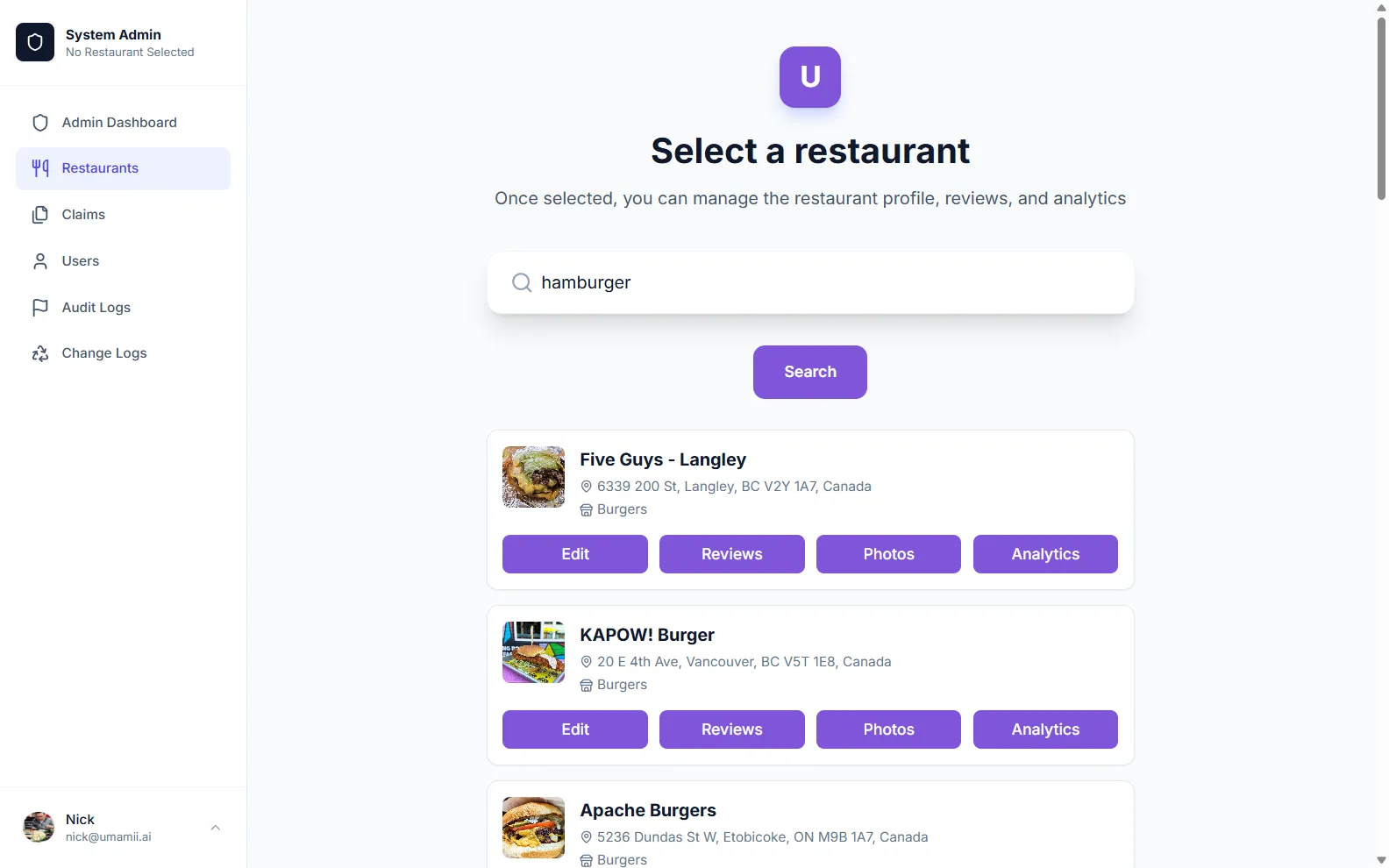
- Restaurant Claiming Flow: We built intuitive entry points straight from search results (“Claim this restaurant”) and targeted invite emails.
- Claim Verification: We support both automated domain matching and manual document upload verification using utility bills or business licenses.
- Review Management: Admins can easily view and reply to reviews on behalf of their restaurant. We made sure replies feel personal, formatted as “
first_namefromrestaurant_name”. - Basic Analytics: A clean dashboard displays vital metrics like total likes, total reviews, total calls, and total website clicks.
Refinement and Polish
We continuously refined the experience based on real testing and feedback. We added a visible notification system to confirm when an administrator successfully approved a claim. We implemented strict verification checks for phone number fields to ensure data quality.
We also caught and resolved a tricky bug where search results for multi-location restaurants didn’t display expected location hyphenation. This was crucial because it made it hard for owners to identify the correct restaurant to claim. Once V1 was stable, we shifted focus entirely to UI/UX polishing by adding clear feedback loops and loading states.
The Road Ahead for V2
This project has clear, quantitative goals tied to Umamii’s overall B2B strategy. By the end of the quarter, our targets include 40 free tier activations, 150 qualified restaurant leads, and maintaining a blended Customer Acquisition Cost (CAC) under $2,000.
Looking ahead to V2, we’re excited to introduce advanced features to drive even deeper engagement. We’re working on sponsorship features to allow users to purchase sponsored search slots and map pins. We’re also integrating AI tools, like an AI Menu Scanner to automatically extract menu items from photos, and Listing AI Refinement to generate improved descriptions for restaurant profiles.
Our focus remains on delivering an exceptional platform that empowers restaurant owners and accelerates Umamii’s growth.
We successfully launched the Umamii B2B portal to accelerate restaurant adoption and power our two-sided marketplace. By choosing a React web stack, unified Firebase Auth, and implementing a protective Audit Change Table, we delivered a secure, self-service platform for restaurant owners.